Wednesday, March 19, 2014

All natural, no-sugar peanut and pistachio butter cookies


I have been seeing recipes for these natural peanut butter cookies around for a while now. When I saw Monet post about them the other day, I knew my time had come. She has a beautiful baby daughter so I knew the recipe would be wholesome, but she is first and foremost a wonderful baker so I was certain these cookies would be really good besides being healthy.
 
That is a must in my book. My idea, and those of you who have been reading my blog for a while have heard me preach this before, is that if you are going to make a dessert or something sweet you might as well go the whole way and make something worth the calories you are ingesting. Otherwise, if you are on a health kick or trying to lose a few pounds, skip dessert altogether and have some fruit or yogurt instead.


 There are cases, however, when this does not apply, like feeding your kids afterschool snacks that are so good they won't really be able to tell they are naturally sweetened and full of wholesome ingredients.
 
So even though I still stand by my belief that a chocolate fudge cake should be a buttery, sweet, dense affair, if the result of a recipe is a lovely tasting cookie that satisfies a craving without going way overboard, why not?


With this batch of cookies I finished the jar of pistachio paste I told you about in my last post. I also used up that almost empty jar of peanut butter I had lying around for more time than I care to remember. It worked out perfectly, since I didn't have enough of either to make a whole batch of just one kind, and how do you split an egg in half?
 
Both cookies are delicious because they are so incredibly full of nutty flavor and they are just sweet enough, with that touch of salty that keeps you wanting more.


See how chewy these are on the inside? Mmmmmh...
 
 The peanut butter cookies are crumbly and dense, perfect to have with a cup of coffee or a big glass of milk. The pistachio cookies have a completely different texture, moist and chewy and rich. They are sweeter because I had added some sugar to the paste (ok, so there is a little sugar in the pistachio cookies, but if you want to make these 100% without sugar, pistachio butter would work just as well) and are fabulous with a cup of unsweetened tea in  my book. The different texture is the result of several factors: i) I used more pistachio paste than PB because I wanted to finish the jar, ii) the pistachio paste was not as dense as the PB, iii) the pistachio cookies baked as long as the others but they were a bit bigger in size.
 
To make the two different batches, I followed Monet's basic instructions but divided the egg mixture into two bowls. Then I added the different nut pastes into each and split the dry mixture between the two. It makes for a little extra work and more bowls to wash but this way you won't end up with a huge amount of cookies if you are making both. If making just one kind, use a whole cup of the nut butter of choice and use just one bowl for dry ingredients and one for wet ingredients.


Wednesday, March 12, 2014

All-natural homemade pistachio pudding


Remember the pistachio ice cream of our childhood? It came in big tubs and had a light, almost flourescent green hue. It was very sweet and tasted more like almonds than pistachios, although it didn't taste much like almonds either if we are really being honest.
 
Pistachio ice cream, or pistachio gelato, is a different world nowadays because Italians take their pistachios very seriously. It is a darker, more natural shade of green, almost a sage green.The not-too-sweet, a-touch-salty incredibly creamy custard is usually interspersed with chopped pistachios that add texture and flavor. It is often made with pistacchi di Bronte, the best the country has to offer although in some gelaterie you can choose between Sicilian, Californian and Iranian pistachios.  I wasn't kidding.


I recently received two large packs of pistachios as a gift: my sister-in-law had been to Bronte and my father-in-law brought back some amazing Iranian pistachios from the Middle East. Everytime I open my cupboard and see them lying there I feel a pang of guilt, because I still haven't used them.
 
So finally, a couple of weeks ago, I made some pistachio paste. It is actually just the pistachio butter from the linked recipe with a little added sugar (no butter), so follow the indications for making the butter.
 
And then it just sat there.
 
I will be honest: I am scared of both the pistachios and the paste. I am trying to loose some weight and pistachios are just one of those things I don't want to be around. I know they are nutritious and full of healthy fat and that I could have them in my breakfast granola or yogurt or as a snack. But you know how it is... you start with one and before you know it you have had about fifty.
 
As a result making gelato, my first instinct, is out of the question, because there is NO.WAY I can resist that.
 
And then yesterday, on a whim, I finally settled for pudding. I though it would be a good solution for the kids and not as much a temptation for me. Little did I know...


So pudding it was. I started surfing the web for a recipe and was astonished at the quantity of dessert recipes I found that used packaged pistachio pudding base. It seems that,  unlike the ice cream of the '70's, green pistachio pudding full of food coloring and goodness knows what else, is still very popular, at least abroad. Who knew?
 
Then I finally came across a recipe on Joy the Baker that actually used homemade pistachio paste.
I'm thinking next time I can avoid the butter, because really, there are enough healthy oils in the nuts.
I unfortunately could only have a spoonful from each child (you know, just for equality's sake) and was really blown away by the outcome. It  was silky and smooth, not too sweet and full of flavor. 


Milk, eggs, sugar, pistachios and a thickening agent... that is all you will need. This is pudding the way your grandma would have made it... the flavor is incredible, the color is natural (if you want it even greener, just get rid of the peels) and it took only 15 minutes (although I did make the pistachio paste beforehand)!
 
Pistachios are pretty easy to find anywhere, and any upscale store sells pistachio paste or butter if you are too lazy to make it, so you have no excuse! Throw away that package of pistachio pudding mix and try this. 


Tuesday, March 4, 2014

Castagnole, an Italian Carnival treat


Today is Martedì Grasso the last day of Carnival all over the world. Except Milan, where it is just beginning.
 
My daughter was home sick last week for three days and as a result she missed a costume party she had really been looking forward to, although I am sure the insane brave grandmother who yearly hosts this party for the whole class was not too upset to have a third grader less running around her apartment.
 
My daughter was a good sport about it all, despite her disappointment, and so I decided to surprise her and organize our own little Carnival party at home. My son's pre-school was closed for a few hours on the same day for meetings, so it seemed like the perfect way to fill an afternoon. We pulled out streamers and I set up a little make-up corner and we had ourselves a good time.
 
 
For it to be a real party, however, we needed snacks. I had some fruit juice stashed away but nothing even closely resembling Carnival treats so I decided to look up a recipe online. Carnival sweets are usually quite basic fried batters or doughs, recipes from a very long time ago when people did not have great means and when there were very few ingredients to choose from after a long winter. The most popular varieties are chiacchiere, tortelli and frittelle, although things get a bit complicated at this point. 


As most things food in Italy (this recent  post being just an example), every region and town has a different name (and often recipe) for the same thing. Milanese chiacchiere are called galani in Venice, bugie in Genova and other names elsewhere. Venetian frittelle are made out of doughnut batter with raisins and pine nuts mixed into it, but in Milan the batter is simple and they are often filled with chocolate cream or custard. Tortelli and zeppole are a part of the same family. Then there is pignolata (as my Sicilian mother in law calls it), little balls of biscuity fried dough bound together with honey that are called struffoli in Naples. Last but not least, let us not forget castagnole (called this way because they are reminiscent of castagne, the Italian word for chestnuts), which I often ate as a child in Venice.
 
I opted for these because they seemed like the quickest and easiest of all to make: there was no time for rising as I had a very hungry Ninja Turtle and rock star waiting for their snack.


While searching on the web, I discovered that in most places they are more akin to doughnuts, crispy on the outside and soft on the inside, and can be filled with a variety of creams like the abovementioned tortelli (or frittelle? or zeppole?).

Very different from what I remembered.
 
Then I finally found a recipe for the castagnole that I grew up eating. It is, once again, a recipe from long ago, prepared with very simple and frugal ingredients. The castagnole were easy to make and they turned out exactly how I remembered them: not overly sweet, with a crumbly texture, almost like short crust pastry.
 
I think it took me 15 minutes tops to make them from scratch and the kids devoured them warm, proceeding to lick the confectioner's sugar off of their finger tips when they were done.


Buon Carnevale!


Ingredients (makes about 40)
50gr butter, softened
80gr sugar
3 eggs
pinch of salt
350gr flour, approximately
1 tsp baking powder
1 tsp vanilla extract (optional)

oil for deep-frying
confectioner's sugar for garnish
 
In a stand mixer or in a bowl, mix the butter and sugar until light and airy. Add in the eggs one at a time. Add a pinch of salt and the flour a little at a time, making sure the batter does not turn too dry. Add the baking powder.
 
Start heating the oil, covering the bottom of the pot by about two inches.
 
Tear small pieces of the dough off and form little balls with your hands. When the oil is hot (you can check by throwing in a little piece of dough - it should not sink), deep fry the dough balls turning them every now and then until they are golden, about 3-5 minutes. They will start cracking a bit, that is normal. When they are ready, place them on a plate lined with paper towel to absorb excess oil. Sprinkle with confectioner's sugar and serve.


Thursday, February 27, 2014

Italian salsa verde


While we say that we are green with envy in English, the Italians associate positive feelings with this color, verde speranza literally meaning that green is the color of hope.
 
It makes perfect sense when you think of it: green is so vibrant, the color of all things fresh and new. Just looking out onto a green meadow or up at a canopy of leaves instantly relaxes our mind and brings peace to our soul.
 
Green in food is often associated to good health: green vegetables and fruits are rich in vitamins and fiber (think leafy greens), not to mention healthy fats (avocado, olives). Green is the color of medicinal plants and herbs used for centuries to cure all kinds of ailments.


There is a very popular green sauce in Italy that derives from an ancient recipe, presumably first brought to the country from the Middle East by the Romans, who then in turn proceeded to spread it to the present day France, Spain and Germany.
 
Each country (and in Italy specifically every region, town and household) has its own version. I spoke to friends from different areas in Piedmont, famous for its "bagnet vert" (which literally means little green dip) served with tongue or mixed boiled meats, and their families all use different ingredients and preparation methods. Some add hard-boiled egg yolks, some use both lemon and vinegar, others like to mix in some gherkins. Some prepare it a few days in advance for extra flavor, others make it fresh and chop the ingredients by hand. I even came across some recipes that require the base to be heated in a pan with olive oil.
 
 
Traditionally this sauce is used to accompany boiled meats, but it works great on grilled vegetables, toasted crusty farmer's bread or fish (we had it with swordfish the other night).
 
It takes five minutes to make and can be stored in the fridge for days.


Does a form of salsa verde exist where you come from? If so, how do you make it?
 
 
Ingredients
3 anchovies
50gr red or white wine vinegar
1 clove garlic
1 tbsp capers in vinegar
100gr extra virgin olive oil
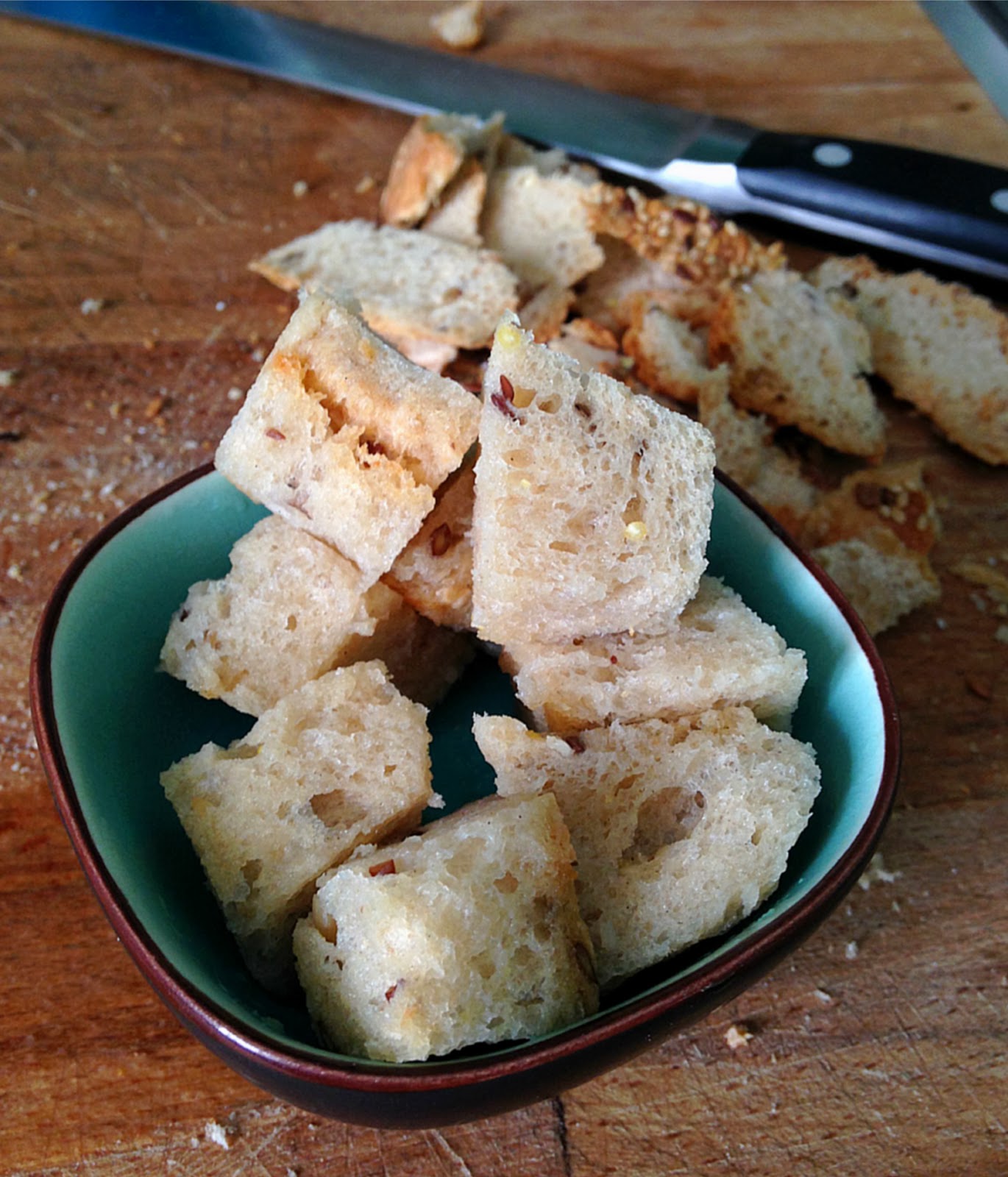
80gr stale white bread, without crust
120gr flat leaf parsley
pepper


Cut the stale bread into cubes, after ridding it of the crust, and soak it in vinegar. Clean and chop the parsley using a knife, mezzaluna or food processor (although the traditionalists will be gasping just about now!) together with the garlic (it is a traditional ingredient, but I don't always use it), capers, anchovies, bread and olive oil.
 
 
Ok, I used whole baguette... it worked fine


Wednesday, February 19, 2014

How to clean an Italian artichoke step-by-step


I have loved artichokes since I can remember, long before moving to the largest artichoke producer in the world.
 
As a young child, I remember ordering the large, green globes in French restaurants, pulling the steamed leaves off one at a time and dipping them into melted butter.
 
In Italy, however, the most commonly found artichokes are not as large and round. Sure, a larger variety exists here too, the Romanesco artichoke, but smaller varieties, some of which are extremely thorny, are more readily available. They taste every bit as delicious as the globe shaped ones, but their leaves are not quite as fleshy and getting to the deliciousness hidden in their core is a little more arduous.
 
 
Prettier than a bouquet of flowers
 
For years I was intimidated at the thought of cleaning them but it didn't matter because in most Italian markets they clean them before/while selling them.
 
That is not always the case, however. And if you buy them at the supermarket, the uncleaned ones are much cheaper than the cleaned ones, not to mention they stay fresher longer than the latter. So learning this very simple skill can be useful, especially because spring is - supposedly - right around the corner and artichokes have started appearing a-plenty around here.


The first thing you will need to prepare when cleaning an artichoke is a large bowl of water with some lemon juice or vinegar in it, to keep oxidation at bay. Artichokes (and your finger nails) will tend to turn brown as soon as you start cutting them.
 
The next step is to get rid of the outer, tougher leaves. A suggestion: always throw out more than you think you need to, even the slightest resistance is off-putting when you are chewing. Trust me.


Then you cut off the tip. Here the same rule applies: cut off more than you think necessary. You want only the tenderest part of the vegetable.


The last (or first if you prefer) step is to shorten the stem. Here is another tip: do not throw them out!!! If you peel off the stringy outer layer, the inside is perfectly edible and delicious, which makes sense when you think it is just a extention of the heart (that we all know is the best part, right?).


Whenever you have a cleaned artichoke and stem, drop it into the bowl of acidulated water.


At this point you can go many ways. You can cook the artichokes whole or in several other ways. This variety of artichoke is small enough that you can eat the whole choke without a problem. But if you are stuffing them or cutting them into pieces for a recipe, you will now proceed to cleaning the choke out.
 
If you are dealing with a whole artichoke, spread open the leaves and scoop out the inner choke with a sturdy spoon. If you will be using them in pieces anyway, cut them in halves or quarters and proceed to clean with a spoon or paring knife.


Now that they are clean, go crazy!
You can make frittata, you can braise them with potaoes, parsley and garlic like I did (the trick is that the potatoes soak up all the flavor and taste like artichoke hearts too), you can use them in a risotto or a pasta sauce. Another typical preparation is to slice them very thinly and eat them raw with Parmesan flakes and dressed with olive oil and lemon juice. It may sound bizzarre but it is delicious. Or you could steam them and preserve them in olive oil for when they will no longer be in season.


If, on the other hand, you are lazy and don't want all the fuss or you have some lovely Romanesco artichokes, skip this post (too late!) eat them like this.


Monday, February 17, 2014

Trattoria dei Bracconieri - a different way to spend a day on Lake Como


The great thing about living in a city like Milan is its proximity to so many beautiful and interesting places. And although Milan may not be considered as beautiful as other Italian towns and cities, it makes up for its looks with lots of glamour and its strategic positioning: whether you are into nature, history, architecture, art or just plain good food, when visiting Milan all you have to do is pick.

The Alps (some of the most beautiful mountains in the world), Italy's three most impressive lakes (Como, Maggiore, Garda), lovely cities (Brescia, Como, Bergamo, Turin, Mantova, Venice, Bologna) and stunning coasts (Portofino, Cinque Terre)  are just a short drive away. Not to mention the proximity of Tuscany and Rome and several European countries (France, Switzerland, Austria, Germany, Slovenia, Croatia) if you have a couple of days to spare.
 
 
When it comes to food, Milan has a lot to boast too: Michelin-starred restaurants, historical eateries, places you go to see and be seen; but I figure that if you are reading a food blog and you are planning a trip over, you probably have already researched and easily found all the information you need.


This is the main reason I don't blog about restaurants very often. This and the fact that I have two little ones, which have somewhat diminished my fancy dining experiences of late. So when I do write about a place they are usually places in the area that I discover with my family: good food, reasonable prices, child-friendly (which doesn't per se mean they are full of loud, screaming children - just that they are casual enough to bring children), the kind of place you will not find in a guide or that your hotel will most likely not recommend because they simply aren't on the radar. I tell you about the kind of off-the-beaten-track places I would like to know about when I travel.


Last week we took an American friend who was staying with us to Como. It had been raining for days when he arrived and because it is the middle of winter, it did not seem like the best time to take a boat ride to see the famous and impressive villas that surround the lake. Our plan was to take him to the city that has become the lake's namesake, Como, a town whose historical wealth (thanks to silk manufacturing and because it is a border town) is reflected in its opulent architecture, definitely worth seeing.

We however wanted our friend to be able to admire the beauty of the lake so we decided to take the funicular up to the town of Brunate, a place none of us had ever been. After a little research we found a place that perfectly suited our  needs: a simple, rustic trattoria. A place that offered a view and, according to comments on Tripadvisor, not bad, overpriced food for tourists.

Monday, February 10, 2014

Dried fruit truffles (a healthy, vegan, sugar free, slow carb snack that is much more delicious than it sounds!)


Girls are girls from the minute they enter this world, I don't care what they say about nature vs. nurture.

I never brought up my daughter as a girly girl and went as far as putting a ban on pink during my pregnancy and the first half year of her life. Admittedly, a phase that did not last very long, thanks to overeager relatives (she was and still is the only female in a pretty large group of cousins) and that unstoppable process that makes parents do a string of things they swore smugly they would never do before actually becoming one.

Nevertheless, my daughter has grown up wearing pants more than dresses and "sensible" colors so that certain clothing items can be passed down to her little brother when she grows out of them. When it comes to toys, we have never denied her Barbie dolls or princess accessories, but we try to keep a pretty gender neutral approach in general.


This has not mitigated the traits in her that are so often ascribed to the female population in the least. She is a real chatterbox, extremely curious, very observant (as in nothing goes unnoticed) and loves clothes, hair, make up and jewelry.  She has been known to make earrings out of stickers, paperclips, fruit and flowers and is always excited to receive the sparkly Disney merchandising I so abhor as presents. She is undeniably a girl. A jeans-clad, sneaker-wearing girl with a glittery soul.

If I wear an old sweater I haven't worn for a while I immediately get asked "Did you go shopping?". If she is in the kitchen doing her homework and I tell her brother off in the bedroom, you can bet your bottom dollar that her head will be sticking through the doorway, neck craning, to see what is happening. She can hear you say something from the other end of the apartment even if you think she is busy dancing and singing, and will come up and enquire about it with insistence. Discreet she is not.

She ooohs and aaaahs on the rare occasions I wear heels.

The other day, the minute I walked into the kitchen after getting ready, she looked up at the very thin stripe of eyeliner I had applied and exclaimed: "Mommy, that black line on your eyes is sooo pretty!". My son is still trying to find it.